In goats and other ruminants, the thiomolybdate trap refers to a severe, induced copper deficiency caused by a complex chemical reaction inside the animal’s digestive system. It is also known as secondary copper deficiency or molybdenum-induced copper deficiency.
In the world of goat husbandry, copper deficiency is often treated as a simple intake problem—give a bolus, and the problem is solved. However, as a Metabolic Researcher, I’ve discovered that for many herds, the problem isn’t a lack of copper; it’s a biochemical kidnapping.
1. Identify the Three Culprits
The trap cannot form without three specific dietary components coming together:
- Molybdenum (Mo): Found naturally in soils and certain regional plants (like clover).
- Sulfur (S): High in brassicas, alfalfa, certain well-water sources, or ammonium sulfate fertilizers.
- Copper (Cu): The target element being trapped and starved from the cells.
2. Synthesize the Rumen Reaction
The true trap forms entirely within the anaerobic environment of the goat’s rumen through a quick, two-step microbial process:
- Step 1: Rumen bacteria take dietary sulfate (SO₄²⁻) and convert it into active sulfide (S²⁻).
- Step 2: The microbes use that newly created sulfur to systematically alter dietary molybdate (MoO₄²⁻), replacing the oxygen atoms with sulfur.
This stepwise substitution leaves behind a highly reactive molecule: a thiomolybdate.
3. Why the “Mineral Buffet” and “Boluses” Often Fail
Once these thiomolybdate molecules form, they act as an irreversible chemical trap through two distinct pathways that bypass standard care:
- The Gastrointestinal Trap (Why Buffets Fail): If dietary copper is floating around the rumen, the thiomolybdates bind to it immediately, forming an insoluble solid complex. The goat’s digestive tract cannot break this bond. A goat cannot “taste” that its copper is being kidnapped by sulfur in its water or molybdenum in its hay. They may stop eating copper from a buffet because they have reached a behavioral “limit,” even while their cells are starving. The trapped copper simply passes straight through the animal unused.
- The Systemic Blood Trap (Why Boluses Fail): If sulfur levels are lower, unreacted thiomolybdates cross right through the rumen wall into the bloodstream. Once in the blood, they bind to plasma albumin and kidnap your goat’s existing copper reserves. Giving a standard copper bolus to a goat caught in a high-molybdenum trap is like trying to fill a bucket with a massive hole—you aren’t fixing the metabolism; you’re just providing more fuel for the excretion process.
4. Recognize Clinical Symptoms
Because copper is vital for melanin production, nerve myelin formation, and skeletal health, a goat caught in a thiomolybdate trap will exhibit distinct clinical signs:
- “Steely” or Bleached Hair: Black goats turn a rusty brown, and their coats lose their natural shine due to failed melanin production (often starting as a “fishtail” look on the tail switch).
- Swayback (Enzootic Ataxia): Kids born to affected does suffer from irreversible nervous system degeneration, leading to hind-limb paralysis and uncoordination.
- Anemia and Diarrhea: Known as “Scouring,” persistent watery diarrhea occurs alongside poor growth rates.
- Spontaneous Fractures: Weak collagen cross-linking leads to fragile bones and joint swelling.
5. Identifying the Trap via HTMA
We don’t rely on visual guesses alone. The critical diagnostic metric for predicting and confirming this trap in a goat’s tissue is the Copper-to-Molybdenum (Cu:Mo) ratio via Hair Tissue Mineral Analysis.
- Ideal Diet Ratio: 6:1 up to 10:1 (with a healthy tissue threshold typically above 4:1).
- The Danger Zone: If the ratio drops below 3:1 (meaning molybdenum levels are elevated relative to copper), the thiomolybdate trap is triggered. The copper is rendered biologically unavailable for critical copper-dependent enzymes, even if the total copper on a feed tag appears adequate.
✅ Summary of the Rumen Trap
The thiomolybdate trap in goats is a microbial-driven chemical reaction where high dietary molybdenum and sulfur combine to permanently lock away copper, starving the animal of an essential micronutrient.
At Horse-n-Bear, we are currently tracking 22 goats to identify how regional soil antagonisms create these traps. We move beyond the guesswork of “self-regulation” and into the clinical reality of Cellular Mineralogy.
Are you managing a herd showing symptoms like coat color changes, or are you reviewing a pasture feed analysis with high sulfur or molybdenum levels? Let us know so we can look at the data together.
This is for informational purposes only. For medical advice or diagnosis, consult a professional.
🔬 Deep-Dive Resources
For those who want to look at the underlying data and biochemical papers that informed this research, we recommend checking out these foundational guides:
- Analytical Research Labs: ARL Mineral Information Guide
- The Veterinary Science Baseline: You can explore detailed clinical indicators regarding secondary copper deficiencies and antagonistic ratios via The Merck Veterinary Manual.
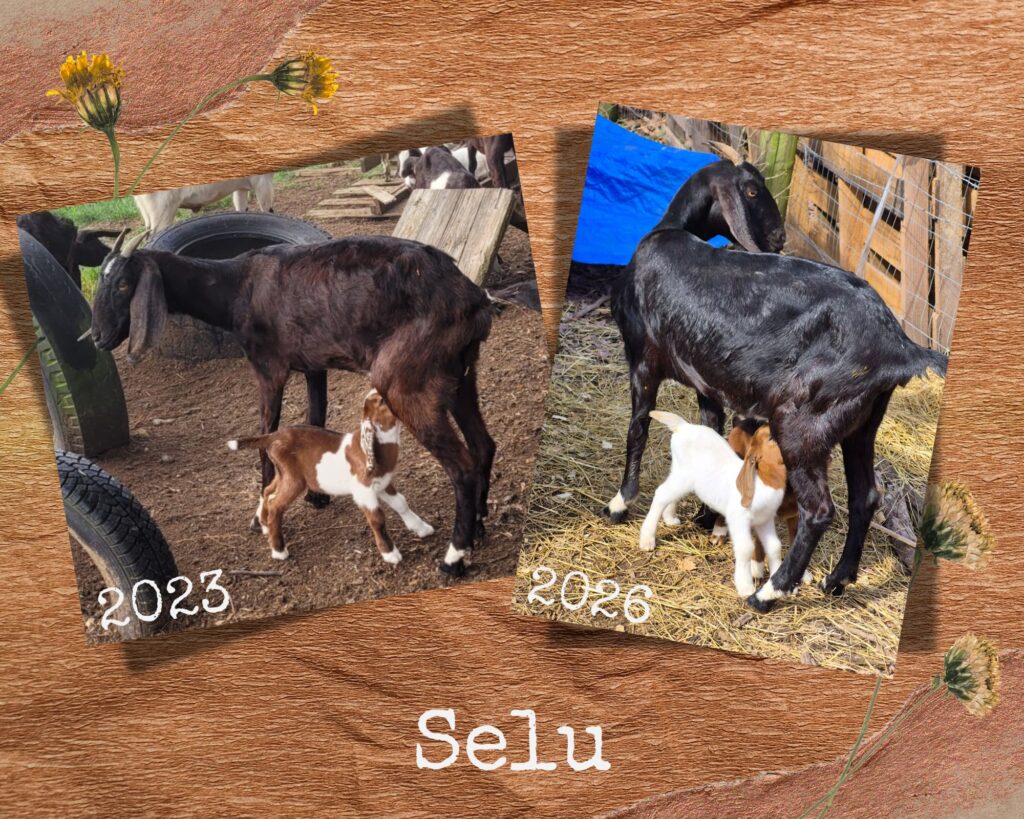
🐐 Case Study: Selu’s Journey from Guesswork to Cellular Balance
The two photos above show Selu, our 3/4 Nubian, 1/4 Boer doe, and highlight the dramatic difference between treating symptoms versus managing regional mineral blocks:
- Left (2023 – Arkansas): After kidding, Selu struggled with classic secondary copper deficiency. Despite being on a standard mineral regimen, the high iron content in our water created a severe antagonistic block. Notice the distinct rusty, bleached tint to her black coat—a clear sign that her cellular melanin production was offline.
- Right (2026 – Virginia): Today, on our farm in Fort Blackmore, Virginia, her coat is a rich, deep black. By pulling the herd off commercial grains, shifting to a targeted forage pelleted blend, and using Hair Tissue Mineral Analysis to monitor her biochemical ratios, we bypassed the local environmental traps.
A Researcher’s Note on Genetics: Because of her Nubian heritage, Selu appears solid black at a glance, but parting her fur reveals a deep gray undercoat. Knowing your animal’s genetic baseline prevents you from misinterpreting natural undercoat graying as a active “fading coat” symptom, allowing you to focus purely on true metabolic indicators like the rust-colored bleaching seen in 2023.